Pages

Showing posts with label Business. Show all posts

Sunday, December 6, 2020

Unable to travel, employees struggle to clear unused annual leave while some firms adjust policies - CNA

SINGAPORE: Many employees are struggling to clear their days of annual leave, said human resource experts, as COVID-19 travel restrictions prevent Singaporeans from going overseas for leisure.

Some employees have tried to save up their unused leave days to bring them forward to the next year, but the lack of a break from work could take a toll on their mental and physical health, experts told CNA.

“Many employees tend to not take annual leave when they are working from home, as they do not feel like they need a ‘getaway’ from the office environment,” said Ms Jaya Dass, Randstad’s managing director for Singapore and Malaysia.

“However, not taking leave for a long period of time can impact energy levels, mental health and overall well-being,” she said, adding that this could lead to employee burnout.

Over-working could also cause higher stress levels, more health problems, as well as reduced creativity and performance, said Robert Walters South East Asia HR director Tricia Tan, factors which could reduce productivity.

READ: 'A necessary investment': Why firms choose to cover employees for mental health services

READ: Rise in firms offering mental health support for staff but more can be done, say experts

Employees hoarding and carrying forward their unused leave days is also an issue for companies, noted Ms Dass, as firms would have to register those unused leave days as a financial liability in the profit and loss statements.

And this might not be a feasible option for start-ups and small- and medium-size enterprises (SMEs) that usually have a lower cash flow, she said.

If companies allow employees to bring forward their unused leave to the next year, it could lead to a “drastic drop” in the workforce when leisure travel can resume.

“This would affect productivity levels and increase stress on the employees who have to take on more workload,” Ms Dass added.

ENCASHING LEAVE

To address the issue of unused leave, Nanyang Technological University (NTU) introduced an initiative to allow employees to donate their leave days to raise money for student aid.

It announced in November that employees donated more than 20,000 days of unused leave worth S$10.25 million.

The voluntary donations were made by 1,821 faculty and staff members, with each employee contributing an average of 11 days. The highest donation was 15 days of leave. 

READ: NTU staff donate more than 20,000 days of unused annual leave to raise money for student aid

This could be a viable option for firms, but only if it is a voluntary option for employees, said Ms Dass.

“It will not be good for employee morale if it is made mandatory that they have to give up their annual leave, especially if they are allowed to carry forward some to 2021,” she added.

Re-encashment of unused leave towards charitable purposes sets the “right intention”, said Ms Tan.

That aside, companies that allow the encashment of leave in light of the COVID-19 situation could be setting a precedent where employees might think this is an option in future, she warned.

It could drive “wrong behaviours around hoarding leave so that they can encash it at the year-end”, she added.

Encashment costs money, which will place financial strain on businesses that are already struggling, Ms Tan said, adding that the priority at the moment should be on ensuring that business operations can continue viably so that employees will continue to have a job.

WHAT COMPANIES CAN DO

Other options companies can look into include allowing a portion of annual leave to be carried over to the next year to be cleared within a set time period, or enforcing block leave.

Companies can also allow employees to use their annual leave as flexible credits for benefits such as self-improvement courses, counselling, health screening, yoga and gym classes as well as health supplements, said Ms Tan.

The last option is to forfeit the leave, she added, but this is the “worst case scenario” that companies should avoid “as it opens up feelings of discontent and unfairness”.

Some companies told CNA that they have adjusted their leave policies given the unprecedented situation brought about by COVID-19.

Mr Ernest Phang, OCBC’s head of corporate services of group human resources, said that the company recognises the “exceptional year” due to the pandemic.

“This year, our employees would be able to carry forward additional days of their annual leave to 2021 (from the current seven days to 12 days) or choose to encash some days (up to five days) of their annual leave,” he said.

In addition, employees on the OCBC Flex Plan will continue to be able to convert up to three days of their leave for credits, which can be used to reimburse co-payment of medical expenses for themselves or their family members, insurance premiums, wellness and other personal expenses.

UOB’s head of group human resources Dean Tong said that the bank increased the number of unused annual leave days that can be carried over into 2021, from 10 to 14 days.

The bank also revised its employee care programme this year to allow staff members to use up to two days of annual leave carried forward to offset any expenses. Previously, this applied only to health and wellness expenses.

A Keppel spokesperson told CNA that the conglomerate’s policy allows unused leave to be carried forward to the following year, up to a maximum of one year’s provision.

“We encourage our employees to consume their annual leave and take days off to unwind and recharge,” the spokesperson said.

Ultimately, it is up to the line managers is ensure that employees use their annual leave and take time to recharge and disconnect from work, said Ms Tan.

“As a line manager, practising what you preach is important - leading by example and setting the tone of the importance of time off,” she added.

On the need to disconnect from work, she said: “We should not neglect the fact that annual leave is set out with the key intention and purpose of allowing employees to take time off work to rest, renew themselves physically and mentally.”

Let's block ads! (Why?)

Article From & Read More ( Unable to travel, employees struggle to clear unused annual leave while some firms adjust policies - CNA )
https://ift.tt/36PPipi
Business

Bill Gates among star speakers at Singapore's biggest fintech festival - The Straits Times

SINGAPORE - Singapore's biggest fintech festival and innovation week kicks off on Monday (Dec 7) with a star-line up of speakers, including Microsoft co-founder Bill Gates, Google chief executive Sundar Pichai and New Zealand Prime Minister Jacinda Ardern.

Deputy Prime Minister Heng Swee Keat, who is also Coordinating Minister for Economic Policies and Minister for Finance, will open the Singapore FinTech Festival and Singapore Week of Innovation and Technology (SFF x Switch 2020) by speaking on the state of the economy.

Owing to the Covid-19 pandemic, this year's festival will largely be held online from Monday till Friday.

Events will happen round the clock and participants can visit technology exhibitions, attend masterclasses by fintech and deep tech experts, as well as network with private equity and investment firms from around the world, said a joint statement from organisers Monetary Authority of Singapore (MAS) and Enterprise Singapore.

There will also be live sessions with climate scientists in the polar regions, the Amazon forest and the Himalayas.

About 1,400 speakers are slated to speak, among them finance and technology leaders, entrepreneurs and policymakers, including

Facebook co-founder Eduardo Saverin, the International Monetary Fund managing director Kristalina Georgieva and Microsoft chief executive Satya Nadella.

In addition to the online sessions, there will be satellite events held in cities around the world from Kampala in Uganda to New York and Shenzhen, where people will be able to visit technology showcases, among other things.

In all, the festival will feature more than 600 sessions, 1,000 exhibitors, and 27 international pavilions.

The organisers said more than 60,000 participants from over 7,000 companies across 130 countries are expected.

MAS chief fintech officer Sopnendu Mohanty said: "We are proud to have built an online event platform that continues to serve as a meeting point for the global fintech community and a hive for business activity when the industry needs it the most."

Enterprise Singapore assistant chief executive for innovation and enterprise Edwin Chow said: "Despite the pandemic, we are confident this event will connect and catalyse new partnerships between innovation enablers, enterprises and start-ups from Singapore and the rest of the world."

Let's block ads! (Why?)

Article From & Read More ( Bill Gates among star speakers at Singapore's biggest fintech festival - The Straits Times )
https://ift.tt/3qt4u3L
Business

iFast maintains digibank ambitions despite failed wholesale licence bid in Singapore - The Business Times

Sun, Dec 06, 2020 - 6:19 PM

WEALTH management platform iFast Corp plans to continue pursuing a digital banking licence both in Singapore and abroad, despite its failed bid for a digital wholesale bank (DWB) licence from the Monetary Authority of Singapore (MAS).

On Friday evening, MAS announced that it will award full digital banking licences to Internet firm Sea and the Grab-Singtel consortium, as well as DWB licences to China's Ant Group and a consortium led by Greenland Financial.

iFast's consortium, with China's Yillion Group and Hande Group, did not succeed. However, MAS has said that it will review whether to grant more of DWB licences in the future, the mainboard-listed company said in a bourse filing on Saturday.

"(During) the DWB application process, iFast has shared with shareholders and investors on how a digital bank licence will further strengthen the group's fintech ecosystem. The group remains committed in continuing its pursuit of a digital bank licence, including in other jurisdictions," the company said.

It added: "The group believes that the efforts and progress made in the last few years to improve the range of investment products and services, and to strengthen its fintech wealth management solutions, have helped the business scale to new heights in recent times."

iFast intends to further improve its consumer, enterprise and fintech solutions to better serve global investors, wealth advisers and corporates.

Shares of iFast closed at S$3.90 on Friday.

Let's block ads! (Why?)

Article From & Read More ( iFast maintains digibank ambitions despite failed wholesale licence bid in Singapore - The Business Times )
https://ift.tt/33OYCIu
Business

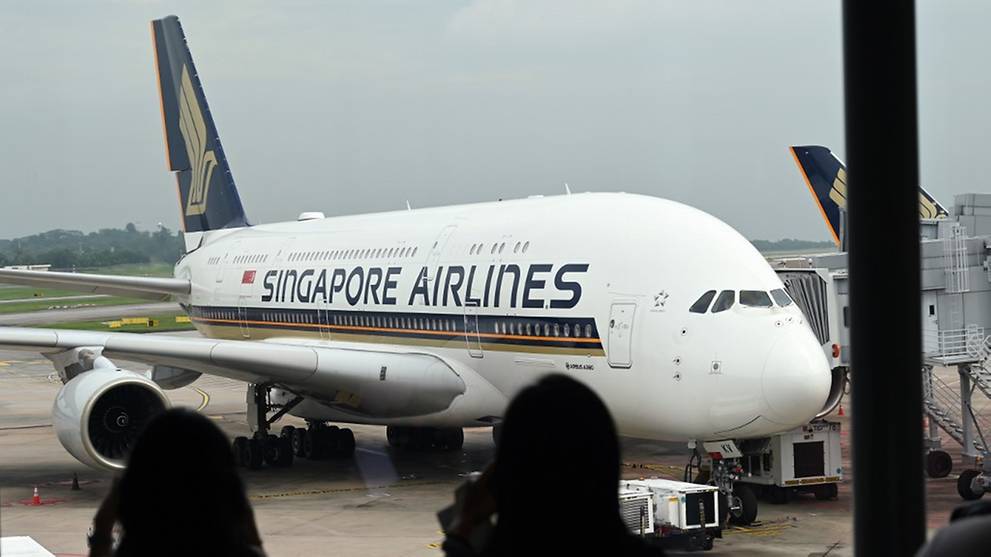
Singapore Airlines prepares for mass shipments of Covid-19 vaccines - The Straits Times

Let's block ads! (Why?)

Article From & Read More ( Singapore Airlines prepares for mass shipments of Covid-19 vaccines - The Straits Times )
https://ift.tt/3qrsjsy
Business

Britain's Queen Elizabeth to get Covid-19 vaccine 'in weeks': Reports - The Straits Times

LONDON (AFP, BLOOMBERG) - Britain’s Queen Elizabeth II will receive the Pfizer-BioNTech coronavirus vaccine within weeks, after UK regulators granted emergency approval and the world’s first roll-out begins next week, reports late Saturday (Dec 5) said.

The monarch, 94, and her 99-year-old husband Prince Philip are in line to get the jab early due to their age and will not receive preferential treatment, the Mail on Sunday reported.

The newspaper said Britain’s most senior royals would reveal they have been given the inoculation “to encourage more people to take up the vital jab”, amid fears so-called anti-vaxxers could dent enthusiasm for it.

Britain is gearing up to deploy its first Covid-19 vaccine with plans to provide the shot at more than 1,000 centres across the country over the coming weeks with the first jab expected to be given on Tuesday (Dec 8).

The vaccine, created by Pfizer Inc. and BioNTech SE, has arrived at secure locations in the UK from Belgium, the Department of Health and Social Care said Sunday. Following quality checks to ensure the jabs have been kept at the correct temperature, the shots will be made available to 50 hospital hubs around the country, before being distributed to doctor-run vaccination centres that will administer the jabs.

Britain will become the first western country to deploy a Covid-19 vaccine after regulators approved the Pfizer-BioNTech shot on Wednesday. The government has bought 40 million doses from the companies, enough to inoculate 20 million people on the two-dose regimen. The shots will be given in order of priority, with the first vaccines going to those in care homes, including workers, and people over 80 years old.

Vaccines are planned to arrive at hospitals Monday with the first vaccinations starting Tuesday, according to a separate release from NHS England, with patients aged 80 and over who are already in hospital or attending appointments there among the first to receive the jab, the NHS said. Any appointments not used for the first priority groups will be given to healthcare workers at high-risk of serious illness from Covid-19.

"This coming week will be an historic moment as we begin vaccination against Covid-19," Matt Hancock, the UK's health secretary, said in a statement. "We are doing everything we can to make sure we can overcome significant challenges to vaccinate care home residents."

One of the major challenges over the coming weeks will be to ensure the vaccine is kept at the right temperature. The shot must be stored at about minus 70 deg C and can only be moved four times within that cold chain before being used, according to NHS England. Once defrosted, the shot has a lifespan of days. Each box of vaccines, containing five packs of 975 doses, must be unpacked manually and the temperature downloaded to check it hasn't changed in transit.

When more of the vaccine becomes available, smaller sites like local pharmacies will also be involved in administering the jabs, the government said.

Related Stories: 

Let's block ads! (Why?)

Article From & Read More ( Britain's Queen Elizabeth to get Covid-19 vaccine 'in weeks': Reports - The Straits Times )
https://ift.tt/3lN4rMy
Business

Saturday, December 5, 2020

'Don't know if I'll ever fly again': Pilots, aircrew in Malaysia turn entrepreneurs to tide over COVID-19 - CNA

KUALA LUMPUR: It has been months since Naeem Nassir was terminated from Oman Air in July, and the 30-year-old pilot still longs for the adrenaline rush and glamour of his previous work. 

His job of two years was quite different from the traditional deskbound nine-to-five. The senior first officer counted frequent international travel, an above average income and an office above the clouds as some of its perks.

For now, taking to the skies is out of reach for Naeem and hundreds of his pilot and flight attendant colleagues in Malaysia who have been grounded or sacked as COVID-19 pandemic has decimated the air travel industry.

The tail of a Malaysia Airlines aircraft is pictured at Kuala Lumpur International Airport
The tail of a Malaysia Airlines aircraft is pictured on the tarmac at Kuala Lumpur International Airport in Sepang on Sep 7, 2020. (Photo: AFP/Mohd Rasfan)

Over the last few months, two major airlines in Malaysia, Malindo Air and AirAsia, have confirmed that there have been layoffs while national carrier Malaysia Airlines has implemented cost-cutting measures such as unpaid leave and pay cuts.

Some of those impacted have turned to entrepreneurship to earn a living, kick-starting businesses in the hope that they yield returns. 

FORMER PILOT’S BURGER VENTURE WHICH HAS TAKEN OFF

Naeem, for instance, has swapped out his aviator hat and smart uniform for dirty aprons and grimy gloves at his new venture, Smashed Burger.

The outlet, located in Bukit Jelutong, Selangor, sells Australian beef patty burgers with toppings such as caramelised onions and beef bacon, for the relatively cheap price of around RM10 (US$2.46).

While flipping burgers may sound less complicated than flying a commercial aircraft, Naeem acknowledged that the transition has been “very drastic”.  

READ: Malaysia says aviation firms may need three years to recover from COVID-19

“I went from sitting down in an air-conditioned cockpit, managing switches and flying the plane, and being served food by cabin crew, to working this burger business.

“I found myself standing for hours beside a hot grill late into the night and engaging directly with customers with different expectations. It’s a drastic change,” he added.

Naeem opened Smashed Burger because he was inspired by the burgers he had tried when he flew to Muscat, Oman.

Smahsed Burger Selangor
A Smashed Burger contains smashed beef patty, special sauce, melted cheese, caramalised onions and lettuce. (Photo: Instagram/smashed.my) 

“There were two kinds of burgers in Oman which I crave for. The first is like those at Shake Shack, so I went to Google their recipes. The second type is 'burger bakar' or burger patties grilled on charcoal grill.”

Fortunately for him, Smashed Burger has been a huge hit among locals in Selangor. Ever since food blogs and local media have reported on the venture, Naeem’s burgers have been selling out almost daily this week, and he has been forced to apologise to his customers, urging them not to travel to his stall and end up disappointed.

“We are thankful… we never expected the business to go viral. The business was initially run just by me and my wife, but now my parents are helping out too,” he added.

FORMER PILOT OPENS HOME-BASED FOOD BUSINESS

Another pilot who has pivoted to a food business is Syed Meerah, a former Malindo Air employee who was sacked in October.

The 33-year-old captain said he was shocked at first, but after discussing with his partner, he decided to take the plunge into a home-based food business.

“After I was retrenched, my girlfriend suggested that I do something that I like – and I love to cook. So I decided to cook for my friends, ask them to review, and after I got good feedback, I decided to go all out,” said Syed.

Grounded chef
Syed Meerah runs Grounded Chef with his former colleague Hazrin Naemran. (Photo: Instagram/groundedchef) 

Syed runs a food delivery service – dubbed Grounded Chef – that serves up mamak-style dishes that have a Peranakan twist such as devil curry chicken and chicken perattal. He works alongside his former colleague from Malindo Air, a flight attendant, who helps him with the deliveries.

“My cooking style was initially just Indian Muslim, mamak cooking. Then after I introduced Nyonya style, which is more sour-based with asam and belacan, that became my signature,” said Syed.

grounded chef
Grounded Chef serves, among others, devil's chicken curry and house special teh tarik. (Photo: Instagram/groundedchef) 

“I used to travel to India a lot for work and over there I learnt about spices, local delicacies and style and I try to implement these in my cooking,” he added.

He cited how he learnt to make a special omelette by adding more milk to make it fluffier, a tip he picked up in Amritsar, a city in north India. 

FLIGHT ATTENDANT STARTS FISH BREEDING VENTURE

Besides food businesses, there are grounded Malaysians from the aviation industry who have opened other ventures. For instance, a flight attendant with AirAsia, who wanted to be known only as Don, told CNA that he has opened a business breeding fighting fish.

Don said that he is still employed by AirAsia, but as the number of flights have dried up, his opportunities for work have dwindled and so has his flight allowance. He flies once a month, if he is lucky.

Fighting fish farm Malaysia
Don is breeding fighting fish in his home. They take around five months to mature before they can be sold. (Photo courtesy of Don) 

“The last time I flew was around two months ago, and frankly, I don’t know if I’ll ever fly again,” said Don. 

He recalled how earlier this year, he and his AirAsia colleagues had heard rumours of upcoming retrenchment exercises.

“Typically we hear that it would most likely happen within 24 hours, and those nights, we all had trouble sleeping.” 

He then decided that he needed some financial security and invested his life savings of around RM17,000 to start a fish farm in his home to breed colourful betta fighting fish, which can be sold for up to RM1,000 each.

fighting fish malaysia
Don enjoys breeding fighting fish but he finds the work required to frequently clean their tanks cumbersome. (Photo courtesy of Don)

“I started out with just two fish, but now I’ve got thousands of them. I made mistakes, but learnt from watching YouTube videos and got suggestions from old-time breeders,” added Don.

To further supplement his income, Don also opened a roadside stall called Popiah World selling fried popiah. He said the stall’s unique selling point is the variety of fillings customers can choose to have in their popiah, including carbonara, spicy beef and chicken with special sauce. 

Catfish, betta and flower horn: How COVID-19 spawned interest in fish keeping among Indonesians

However, he has learnt that running two businesses is “tiring”, especially the fish business, which has taken up a lot of his time and energy.

“Breeding fishes is not my specialty. I love animals, so I enjoy it but it’s exhausting to change the water in the containers every 3 days and I have no money to hire an assistant. It also takes five months to breed the fishes until they’re mature and ready to be sold. This requires patience before I would see any returns on my investment,” added Don.

“THE HIGHER YOU ARE, THE HARDER YOU FALL”

While Naeem, Syed and Don’s businesses have had varying degrees of success so far, all three are in agreement that the income they are grinding out pales in comparison with what they were earning while flying pre-COVID-19.

Naeem said that as a pilot with Oman Air, he was earning a “five-figure salary” and although his Smashed Burger venture has been popular, he still has been forced to tone down his lifestyle.

“I was blessed with a good salary. I bought a house. I now own two properties and my (loan) commitments are very, very high,” said Naeem. “It’s been a big change.”

Syed concurred, explaining how his spending power has diminished now that he is relying on his home-based business for income.

“As the saying goes – the higher you are, the harder you fall,” said Syed. “This whole episode has been a wake-up call for all of us,” he said. “At the moment, it’s about getting through the day.”

READ: Malaysia's budget for 2021 is its biggest ever. Will it cushion the impact of COVID-19?

He was grateful that the government has extended the bank loan moratorium for Malaysians who have been retrenched as a result of COVID-19.

“It helps a lot but when the moratorium ends, the problem arises again. These current businesses opened by pilots and flight attendants won’t be able to sustain unless the moratorium is extended further,” said Syed.

“We have car and house loans which need to be serviced as well and we would appreciate more help from the government. Other than the moratorium, there has been no other forms of financial aid,” he added.

Meanwhile for Don, he still draws a basic salary as he is still employed with AirAsia, but it is a fraction of what he was earning in 2019 when he was flying more often.

“My wife’s income has been reduced by 30 per cent. The banks have approved our moratorium request for our home loan, but not for my car and motorbike,” said Don.

“So there’s nothing else I can do but try my best to cover the costs,” he added.

WAITING TO FLY AGAIN

While their businesses have been a refreshing change, all three told CNA they are keen to return to work with their airlines. 

Syed said: “I’m waiting to get back in the air, that’s about it. This (business) is something to tide me over.” 

However, he acknowledged if he were to return to flying full time, he would miss his “fun cooking business” and the conversations he has with his customers. 

“The only (main difference) is the money, always the money,” said Syed. “I can’t earn whatever I earned flying from my business, and I have (financial) commitments.”

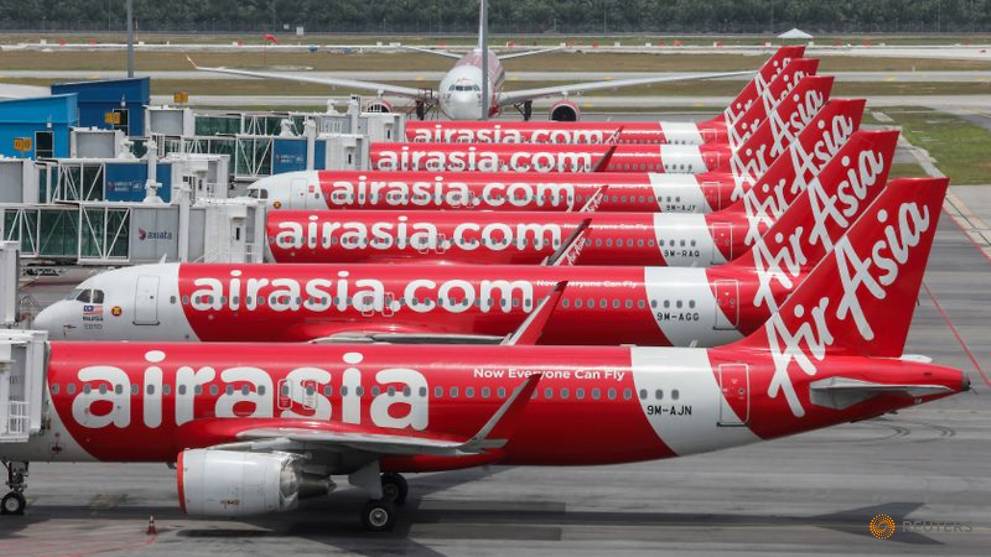
FILE PHOTO: AirAsia planes are seen parked at Kuala Lumpur International Airport 2, during the move
AirAsia planes are seen parked at Kuala Lumpur International Airport 2 in Sepang, Malaysia, Apr 14, 2020. (File photo: REUTERS/Lim Huey Teng)

Naeem said that it has always been his ambition to both be a pilot and also own a food and beverage business, and he is hopeful that he can follow both dreams once the flying industry has returned to normal. 

“Perhaps it has been a blessing in disguise that I got laid off, so that I can chase this dream,” said Naeem. 

“If I were to start flying again, I would love to continue this business because I believe in sharing good quality food for everyone to enjoy. Hopefully this business can grow further again,” he added. 

READ: 30% of Malaysians expected to be vaccinated against COVID-19 next year, says PM Muhyiddin

Don, the flight attendant, is hopeful that the air travel industry will soar again in the near future. He noted that there are plans to bring in the COVID-19 vaccine and he is optimistic it will inspire confidence in Malaysians to resume flying. 

“I hope AirAsia will recover and passengers will no longer be afraid to travel. If I’m working, at least I’m assured of a salary,” said Don. 

“I don’t mind flying even with the precautions in place. I wear the PPE (personal protective equipment) while flying and ensure I take a shower at the airport after every flight,” he added. 

BOOKMARK THIS: Our comprehensive coverage of the coronavirus outbreak and its developments

Download our app or subscribe to our Telegram channel for the latest updates on the coronavirus outbreak: https://cna.asia/telegram

Let's block ads! (Why?)

Article From & Read More ( 'Don't know if I'll ever fly again': Pilots, aircrew in Malaysia turn entrepreneurs to tide over COVID-19 - CNA )
https://ift.tt/3lLn1Vn
Business

Ant, Grab's venture and Sea to usher in Singapore digital banking - AsiaOne

SINGAPORE - Southeast Asian ride-hailing firm Grab’s venture with Singtel and internet platform company Sea Ltd have each won licences to run Singapore’s first digital banks, in the city-state’s biggest banking shakeup in two decades.

Singapore’s move to herald newer players including Alibaba Group affiliate Ant Group and a consortium comprising China’s Greenland Financial Holding Group comes as Asian regulators tap tech firms to shake up their often staid markets.

Singapore’s criteria, which included local control and S$1.5 billion in paid-up capital for full digital banking, was stricter than its main financial rival Hong Kong, which has issued eight digital licences.

“Digital banks will need to contend with an uncertain economic environment, low interest rates and competitive responses from the incumbent banks and other financial services players,” said Wong Nai Seng, a partner at Deloitte, who worked at Singapore’s central bank for 17 years.

The Monetary Authority of Singapore (MAS) expects the digital banks to start operating from early 2022 after meeting the necessary pre-conditions of Singapore, one of the world’s top financial centres, and Southeast’s main hub.


“We expect them to thrive alongside the incumbent banks and raise the industry’s bar in delivering quality financial services, particularly for currently underserved businesses and individuals,” said Ravi Menon, managing director of the Monetary Authority of Singapore (MAS).

MAS, the central bank, had previously shortlisted 14 of 21 applications received by Dec. 31 last year.

Analysts say the development is unlikely to seriously impact incumbents DBS Group Holdings, Oversea-Chinese Banking Corp and United Overseas Bank which have already invested heavily in technology.

The licensees could use the opportunity as a step towards expanding into larger Southeast Asian markets.

SOUTHEAST ASIAN TECH TITANS

Grab’s venture and Sea won digital full bank licences. This allows them to take deposits and offer services to both retail and corporate customers in a country where most of its 5.7 million population already have bank accounts.

Their operations will initially be restricted as they build up business models and processes before gradually becoming fully functional.

Grab, Southeast Asia’s most valued start-up at over $15 billion which is backed by Softbank Group Corp, will hold 60per cent in its venture with Singtel. Grab has evolved from a food delivery app operator into a one-stop shop for ride-hailing, food delivery, payments and insurance.

At a virtual media briefing on Friday, both firms said the consortium would add about 200 roles by end-2021.

“Singapore is a gateway to Southeast Asia. Today’s winners will also look to seek upcoming digital bank licenses in Malaysia and Philippines to create regional powerhouses for bringing fintech and lifestyle together,” said Varun Mittal, head of emerging markets fintech business at consultancy EY.

Shares of U.S.-listed Sea, which is involved in e-commerce, online gaming and digital payments, rose 5.6per cent on Friday. Founded in 2009 by Chinese-born entrepreneur Forrest Li, who became a Singapore citizen, Sea boasts a market valuation of $90 billion.

Li, Sea’s chairman and group CEO said the licence gave the firm a chance to address the “underserved” financial needs of young consumers and small and medium businesses in Singapore.

Ant and the Greenland consortium, winners of digital wholesale banking licences, can tap small and medium-sized businesses. Alibaba’s shares edged up 0.6per cent.

MAS said since the two wholesale banks are introduced as a pilot, it could give more licences later. Previously, it had flagged offering up to three wholesale licences.

It said on Friday that it had taken into account the impact of the Covid-19 pandemic on the applicants’ business plans.

Let's block ads! (Why?)

Article From & Read More ( Ant, Grab's venture and Sea to usher in Singapore digital banking - AsiaOne )
https://ift.tt/3geYhne
Business

SIA, other firms look to build on existing vaccine handling capabilities - The Straits Times

SINGAPORE - Singapore Airlines is taking steps to raise the limit of dry ice it can carry per flight, so it can transport any Covid-19 vaccine on a larger scale in future.

The national carrier on Saturday (Dec 5) said it is working with vaccine manufacturers and regulators to increase the amount of dry ice that can be carried safely on its planes from 3,500kg per cargo flight now.

Please or to continue reading the full article.

Get unlimited access to all stories at $0.99/month

  • Latest headlines and exclusive stories
  • In-depth analyses and award-winning multimedia content
  • Get access to all with our no-contract promotional package at only $0.99/month for the first 3 months*

*Terms and conditions apply.

Let's block ads! (Why?)

Article From & Read More ( SIA, other firms look to build on existing vaccine handling capabilities - The Straits Times )
https://ift.tt/2JX3RPe
Business

Singapore Airlines to prioritise cargo capacity for transportation of COVID-19 vaccines - CNA

SINGAPORE: Singapore Airlines (SIA) will prioritise cargo capacity to transport COVID-19 vaccines when they become available, said the national carrier on Saturday (Dec 5). 

It will prepare seven Boeing 47-400 freighters for such operations, SIA said in a media release, adding that passenger planes will also be deployed where needed.

"SIA will make available cargo space on its flights and accord uplift priority to COVID-19 vaccine shipments across the key vaccine trade lanes," said the airline.

READ: Singapore Airlines confident of having 'very strong liquidity' as it explores new sources of funds to tide through COVID-19: CEO

To ensure that it is ready to transport the COVID-19 vaccines, SIA said it has been "actively engaging" with various stakeholders across the supply chain and in pharmaceutical export markets over the last few months.  

SIA has signed master leasing agreements with key cold chain container providers to ensure that the airline has access to sufficient temperature-controlled containers to handle large volumes of vaccines.

Tracking devices have also been certified for use, the airline added, providing vaccine producers and their logistics service providers with "complete end-to-end visibility and tracking of the shipments (particularly temperature readings) throughout the journey".

Moderna’s COVID vaccine, for instance, needs to be transported and stored at -20 degrees Celcius. The Pfizer/BioNTech vaccine must be kept at -70 degrees Celcius and can be kept in a regular fridge for just five days.

Commentary: So the vaccines are here, but how will they get to billions across the globe?

The airline noted that in the last financial year, SIA Cargo carried about 22,000 tonnes of pharmaceutical shipments across its network.

"Singapore's geographical location, coupled with SIA's extensive network connectivity and the strong pharmaceutical handling capabilities at Singapore Changi Airport, positions it well as a key transit hub for the transportation and distribution of pharmaceuticals," it added.

Mr Chin Yau Seng, Senior Vice President Cargo of Singapore Airlines described the transportation and distribution of COVID-19 vaccines as "one of the biggest and most important supply chain challenges of our generation". 

"SIA has a well-established track record of safely and reliably transporting critical pharmaceutical shipments," he added. 

BOOKMARK THIS: Our comprehensive coverage of the coronavirus outbreak and its developments

Download our app or subscribe to our Telegram channel for the latest updates on the coronavirus outbreak: https://cna.asia/telegram

Let's block ads! (Why?)

Article From & Read More ( Singapore Airlines to prioritise cargo capacity for transportation of COVID-19 vaccines - CNA )
https://ift.tt/3mO6Ure
Business

Foot Locker temporarily closes Orchard outlet, no in-store events this weekend - The Straits Times

SINGAPORE - The Singapore Tourism Board (STB) has ordered shoe retailer Foot Locker to suspend operations for 10 days from Saturday (Dec 5) at its Orchard Gateway @ Emerald outlet for failing to comply with Covid-19 safe management measures.

“Large crowds had gathered at the outlet for a product launch on Friday, despite repeated advisories by public enforcement agencies on crowd management,” said STB in a joint statement with Enterprise Singapore on Saturday.

During the period of its suspension, Foot Locker’s Orchard outlet is not permitted to conduct physical retail activities, but may continue to carry out online retail activities. 

Investigations are still ongoing and further enforcement action may be taken, the agencies said.

STB and ESG are also engaging Foot Locker on the measures it will take for future product launches, including the potential cessation of all such physical launches at Foot Locker locations across Singapore.

They added that retail businesses are strongly advised to hold online sales instead of organising physical product launches that may attract large crowds. 

“If physical launches are held, businesses must ensure they have robust plans for safe management measures in place, including crowd management and capacity limits,” the agencies said.

On Friday night, crowds had gathered apparently for Saturday's release of the limited-edition Adidas sneaker, an item that can fetch a tidy profit on the secondary market due to high demand.

A Foot Locker spokesman told The Straits Times on Saturday that it will not be hosting any in-store events this weekend.

"We take the issues of crowding seriously and are continuing to work diligently and proactively to maintain safe distance for all of our shoppers and staff members.

"We will continue to enforce restrictions on maximum occupancy for all of our stores according to the guidelines set forth by local authorities," said the spokesman.

When ST visited the footwear store at around 10am on Saturday, there were no crowds.

Security officers were seen advising some members of the public waiting outside the store that the sneaker launch had been cancelled.


There were no crowds at the footwear store at around 10am on Dec 5, 2020. ST PHOTO: KELVIN CHNG


Security officers were seen advising some members of the public waiting outside the store on Dec 5 that the sneaker launch had been cancelled. ST PHOTO: KELVIN CHNG

On Friday, photos circulated on social media showed a crowd of around 100 people packed shoulder to shoulder outside the footwear store at about 8pm.

The crowds dispersed shortly after 8.30pm after safe distancing ambassadors and police officers arrived.

Adidas' Yeezy sneaker line, the product of a collaboration between rapper Kanye West and the sports shoe brand, drew large crowds in Singapore and abroad during past launches.

Adidas Singapore had held an online ballot for Saturday's limited release, but many sneaker aficionados who missed out appeared to have wanted to try their luck at Foot Locker, given the high resale value of the shoes.

Last June, the launch of the limited-edition Adidas Yeezy Boost 350 V created a long queue lasting many hours before the release at Foot Locker's Jewel Changi Airport outlet.

Let's block ads! (Why?)

Article From & Read More ( Foot Locker temporarily closes Orchard outlet, no in-store events this weekend - The Straits Times )
https://ift.tt/3mJb9Ve
Business

Probe under way after crowds gather outside Foot Locker at Orchard Gateway: STB - TODAYonline

[unable to retrieve full-text content]

  1. Probe under way after crowds gather outside Foot Locker at Orchard Gateway: STB  TODAYonline
  2. Foot Locker temporarily closes Orchard outlet, no in-store events this weekend  The Straits Times
  3. Sneaker enthusiasts crowd Orchard Road shoe retailer in breach of Covid-19 rules  AsiaOne
  4. View Full coverage on Google News
Article From & Read More ( Probe under way after crowds gather outside Foot Locker at Orchard Gateway: STB - TODAYonline )
https://ift.tt/3ooNh9z
Business

Friday, December 4, 2020

Cultured meat: No-kill products may be food for the future - The Straits Times

SINGAPORE - In a world first, Singapore on Wednesday (Dec 2) approved the sale of a cultured meat product here.

The chicken bites by Californian start-up Eat Just are made by culturing animal cells in bioreactors instead of rearing animals on farms, and are not yet available for sale and consumption anywhere else.

The Singapore Food Agency (SFA) said it was allowing the cultured chicken to be sold here after its evaluations determined it to be safe.

The company would not be drawn on a timeline on when the product will be available, but the firm's chief executive Josh Tetrick told The Straits Times on Thursday that it will be soon, and at a "higher-end" restaurant.

The aim is to make cultured meat cheaper than conventionally farmed meat, he added.

Why it matters

Alternative proteins, such as cultured meat, could pave the way for more sustainable food production and better food security.

While a report on land use by the UN's climate science body last year found that plant-based diets were still associated with a lower environmental impact compared with meat-based ones, it may not be feasible to get everyone to go vegetarian.

Culturing meat could be an alternative to rearing livestock, which according to the UN's Food and Agricultural Organisation make up 14.5 percent of emissions from human activity.

Culturing meat involves taking cells from an animal (often done in a harmless way, such as through a biopsy), and then growing the cells in a nutrient broth within a bioreactor.

This process has been associated with a number of environmental benefits.

One, it reduces emissions associated with rearing livestock.

There is less need to clear forests for farms or grow crops for animal feed, and reduces methane emissions from ruminants like cows, which releases a lot of methane during digestion of their food. Methane is considered a more potent greenhouse gas than carbon dioxide over shorter time spans.

Two, culturing meat can be done in a smaller land area compared with the livestock supply chain.

Three, it allows meat to be produced without slaughter. This avoids the need to confine livestock to small spaces, and reduces the chance of diseases spreading between humans and animals.

On the food security front, cultured meat could also boost the resilience of import-dependent nations like Singapore, which sources more than 90 per cent of its food from overseas.

Eat Just has said its cultured chicken bites will be manufactured in Singapore, and Mr Tetrick told ST on Thursday that the firm aims to produce enough not just for the domestic market, but for the rest of Asia as well.

What lies ahead

The need to feed a growing global population, which could reach almost 10 billion by mid-century, is straining food production systems.

And the impacts of climate change - whether changing rainfall patterns or more frequent extreme weather events - could put further stress on food security.

These trends highlight the need for new ways of producing food, with a smaller carbon footprint.

Critics have said the environmental impact of culturing meat - an energy-intensive process - is not definitively better than rearing animals the traditional way.

Context is important. In Singapore, for instance, most energy is generated by natural gas - a cleaner fossil fuel than coal or oil. Advancements made in renewable energy systems, and scaling up production of cultured meat, could boost efficiency and lower the carbon footprint of cultured meat.

As with many new innovations, more studies are needed to assess the different impacts of cultured meat products.

The SFA has done so on the food safety front. But even as research on environmental impact continues, another hurdle remains: Consumer receptivity to eating meat made a different way.

The impact of climate change can already be felt. Consumers can help, by keeping an open mind.

Let's block ads! (Why?)

Article From & Read More ( Cultured meat: No-kill products may be food for the future - The Straits Times )
https://ift.tt/39KrJjC
Business

Trial of smart letterboxes to start at Clementi HDB blocks - The New Paper

Residents of Block 202 Clementi Avenue 6 will, in a fortnight's time, be notified on their mobile phones when their mail has arrived.

They will also collect their mail from a central vending machine-style unit at the foot of their block instead of their traditional letterboxes.

These Housing Board (HDB) dwellers will be the first in Singapore to take part in a year-long trial of a smart letterbox system that SingPost envisions will replace traditional units.

Called PostPal, each machine will store mail for an entire housing block, with items auto-sorted into storage slots.

Instead of using a key to unlock their designated letterbox, residents will scan a QR code generated by the SingPost app to retrieve their items from the machine.

Through the app, residents will be notified of mail delivery and the number of items awaiting collection. They can also use the app to authorise others to collect the mail on their behalf.

PostPal's features will reduce delivery mistakes as well as the postmen's workload, SingPost said yesterday when announcing the public trial.

Instead of having to sort and slot mail into individual letterboxes, postmen can load items into the machine to be sorted automatically.

Mail addressed to homes involved in the trial will be affixed with a data matrix code - similar to a QR code - that will be scanned by PostPal for sorting and notification.

The trial will start with two HDB blocks in Clementi: Residents of Block 202 Clementi Avenue 6 will begin using the system on Dec 18, while those in Block 205 will follow in the weeks ahead.

PostPal is a newer iteration of the smart letterbox prototype unveiled by SingPost last year. It was developed in collaboration with PBA Group, a robotics and automation firm headquartered in Singapore.

The storage modules in PostPal units can be customised to the mail profile of each individual block, SingPost said.

Mr Vincent Phang, SingPost's Singapore head and chief executive of postal services, told the media at PostPal's unveiling yesterday that the system will provide added security as only postmen will have access to the machine's mail deposit, and each machine will have a closed-circuit television camera.

When asked about accessibility for the less tech-savvy, he said those without smartphones can use a one-time password sent by SMS to retrieve their mail.

"We do acknowledge that there may be some apprehension in some people at the start, but we will work through those issues."

The PostPal trial will be progressively rolled out to more precincts, depending on the performance of the units in Clementi and approval from the authorities, SingPost said.

Let's block ads! (Why?)

Article From & Read More ( Trial of smart letterboxes to start at Clementi HDB blocks - The New Paper )
https://ift.tt/3qtQCpK
Business

South Korea reaches deal to buy AstraZeneca's Covid-19 vaccine candidate - The Straits Times

SEOUL (REUTERS) - South Korea has reached a deal with AstraZeneca to purchase its coronavirus vaccine candidate as it seeks to secure supplies amid a resurgence of outbreaks, local media reported on Thursday (Dec 3).

The government has said it was in final talks with global drug-makers including AstraZeneca, Pfizer Inc and Johnson & Johnson over their experimental vaccines, and launched a preliminary review of AstraZeneca's product in October for potential fast-track approval.

The JoongAng Ilbo newspaper said health authorities signed a contract with the Britain-based company on Nov 27, and were nearing agreements with Pfizer and Johnson & Johnson, citing an unidentified government official.

"The AstraZeneca deal has been done, and a memorandum of understanding was reached with both Pfizer and Johnson & Johnson. But further negotiations are needed to finalise the amount of supplies and the timing of shipment," the official was quoted as saying.

The Yonhap news agency also reported, citing an unnamed health official, that an agreement with AstraZeneca was inked recently and the government would make an announcement as early as next week after completing negotiations with other firms.

The Korea Disease Control and Prevention Agency (KDCA) said that the JoongAng report was not the government's official position, but that it would finalise talks and unveil comprehensive results shortly.

The KDCA has said 172 billion won (S$210 million) was set aside to buy an initial 60 million doses this year, enough to vaccinate about 60 per cent of the country's population of 52 million, around the second quarter of 2021.

It has secured 20 million doses via the Covax facility, an international Covid-19 vaccine allocation platform co-led by the WHO.

Related Stories: 

Let's block ads! (Why?)

Article From & Read More ( South Korea reaches deal to buy AstraZeneca's Covid-19 vaccine candidate - The Straits Times )
https://ift.tt/3g7HbHS
Business

Thursday, December 3, 2020

9 new COVID-19 cases in Singapore, including 1 locally transmitted infection - CNA

SINGAPORE: Singapore reported nine new COVID-19 cases as of noon on Thursday (Dec 3), including one locally transmitted infection. 

The local case is a dormitory resident and was asymptomatic. The man, known as Case 58443, was detected through surveillance, said the Ministry of Health (MOH).

"His polymerase chain reaction test yielded a very high Ct (cycle threshold) value, which is indicative of a low viral load. All his close contacts at the dormitory and his workplace have been isolated and placed on quarantine," added the ministry. 

The rest of the infections are imported cases and were placed on stay-home notice upon arrival in Singapore. They were all asymptomatic.

READ: HSA evaluating initial data on COVID-19 vaccine submitted by Moderna for use in Singapore

The imported cases include a Singaporean and two permanent residents who returned from the United States. Another two cases are work pass holders currently employed in Singapore who arrived from Nepal. 

The remaining cases include a dependant’s pass holder who arrived from France, and two short-term visit pass holders who arrived from Indonesia - one to visit Singaporean family members and the other to visit her fiance. 

There were no new cases in the community.  

MOH said the overall number of new cases in the community has remained low, with a total of four cases in the past week who are currently unlinked. More details can be found in the health ministry's daily situation report

ONE MORE PATIENT DISCHARGED

One more case was discharged from the hospital, bringing Singapore's total recoveries to 58,145.

There are 26 cases still in hospital. Most of them are stable or improving, and no one is in the intensive care unit. Another 39 are being isolated and cared for at community facilities.

Twenty-nine people have passed away from complications due to COVID-19 infection.

As of Thursday, Singapore has reported a total of 58,239 COVID-19 cases. 

HSA EVALUATING DATA ON COVID-19 VACCINE SUBMITTED BY MODERNA 

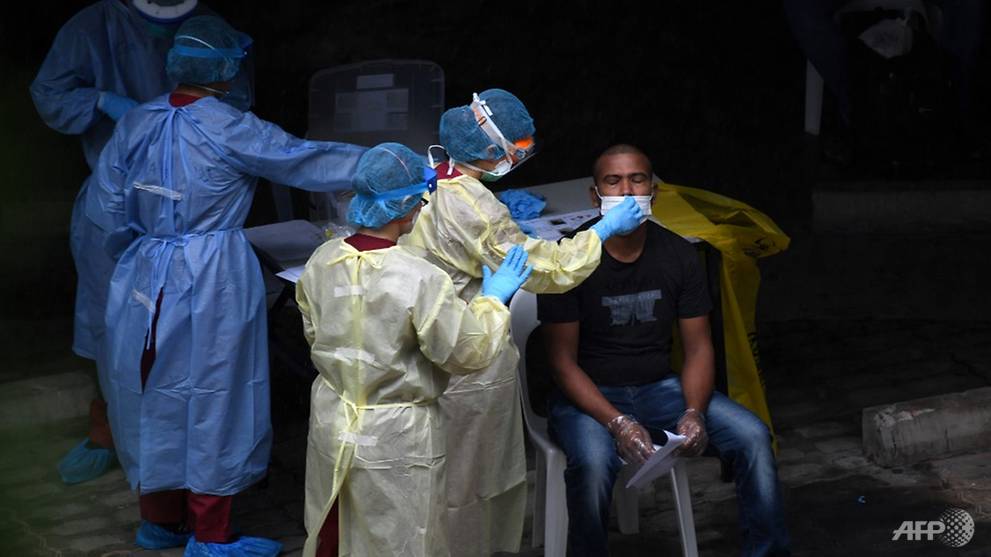
Moderna has started submitting initial data on its COVID-19 vaccine candidate to the Health Sciences Authority (HSA), said the authority on Wednesday. 

This is part of the process to evaluate its suitability for use in Singapore.

The biotechnology company “will continue to roll in data as soon as they become available”, as agreed with the authority, said HSA. 

A rolling review, or rolling submission, process allows companies to submit real-time data from ongoing studies of the vaccine while the regulatory review is conducted simultaneously.

HSA said it has already started evaluating the available data submitted by Moderna to ensure “expeditious review”.

On Monday, Moderna announced it was “forging ahead” with the rolling review process for approval with HSA.

Moderna said that its vaccine was 94.1 per cent effective against COVID-19 and 100 per cent effective in preventing severe cases following the results of a late-stage Phase 3 study. 

BOOKMARK THIS: Our comprehensive coverage of the coronavirus outbreak and its developments

Download our app or subscribe to our Telegram channel for the latest updates on the coronavirus outbreak: https://cna.asia/telegram

Let's block ads! (Why?)

Article From & Read More ( 9 new COVID-19 cases in Singapore, including 1 locally transmitted infection - CNA )
https://ift.tt/3mFZDtE
Business

Singapore is the first country to approve the sale of lab-grown meat - Engadget

Eat Just Chicken
Eat Just

Singapore has become the first country in the world to approve the sale of cultured meat. On Wednesday, the city-state’s Food Agency gave Eat Just, a US startup best known for its plant-based egg substitute, the go-ahead to sell its lab-grown chicken as an ingredient in chicken bites (pictured above). The company told NBC News initial availability of its meat will be limited, with only a single restaurant selling the nuggets to start. However, Eat Just plans to eventually sell the meat directly to consumers as it increases its manufacturing capacity.

Cultured meat is different from the plant-based alternatives we’ve seen from companies like Impossible Foods and Beyond Meat. In this case, it’s real meat that’s created by taking stem cells from an animal’s muscle or fat tissue and putting it in a medium that supports their growth. Josh Tetrick, the company’s CEO, compared the process to brewing beer. The resulting chicken is both safe to eat and includes a high amount of protein and a diversified amino acid composition.   

Additionally, one major advantage of Eat Just’s manufacturing process is that it doesn’t involve any antibiotics. The overuse of antibiotics in industrial farming is turning into something of a ticking time bomb when it comes to human health.“We think that [the way] to really solve the meat problem — which is a health problem, a deforestation problem, a morality problem — is to make animal protein,” Tetrick told NBC News.   

The startup had been working toward regulatory approval for approximately two years. As part of the process, it had to show it could consistently manufacture the cultured chicken. While Singapore’s decision to allow Eat Just’s could encourage other countries to follow suit,  regulatory approval in the US and other countries where land isn’t in scarce supply is likely years away. In the US, in particular, there are strong lobby groups that represent cattle and other animal farmers that will be against cultured meat.

All products recommended by Engadget are selected by our editorial team, independent of our parent company. Some of our stories include affiliate links. If you buy something through one of these links, we may earn an affiliate commission.

Let's block ads! (Why?)

Article From & Read More ( Singapore is the first country to approve the sale of lab-grown meat - Engadget )
https://ift.tt/37AU9dg
Business

S'pore's new Covid-19 case in dorm detected in proactive surveillance; S'porean among 8 imported - The Straits Times

SINGAPORE - The lone locally transmitted coronavirus case reported on Thursday (Dec 3) was from a workers' dormitory, the Ministry of Health (MOH) said in a statement on Thursday night.

The man was asymptomatic and the infection was detected through proactive surveillance, said MOH. The Ministry added that his polymerase chain reaction test result indicated a low viral load, an indicator of the amount of virus in the body.

His close contacts at the dormitory and his workplace have been isolated and placed in quarantine.

There were nine cases in all confirmed on Thursday, bringing Singapore's total to 58,239.

The other eight cases were imported. They comprised one Singaporean, two permanent residents (PRs), two work pass holders, two short-term pass holders and a dependant's pass holder.

The Singaporean and both PRs had returned from the United States. Both work pass holders were from Nepal, while both short-term visit pass holders arrived from Indonesia. The dependant's pass holder was an 18-year-old woman coming from France.

All eight cases were asymptomatic when tested, and all were placed on stay-home-notices on arrival in Singapore and tested, said MOH.

MOH added that the number of new cases in the community has remained low, with a total of four new cases in the past week, all of which are unlinked.

With one more patient discharged on Thursday, 58,130 have recovered from the disease.

There are 26 patients still in hospital, with none in intensive care, and 39 are recuperating in community facilities.

Singapore has had 29 deaths from Covid-19 complications, while 15 who tested positive have died of other causes.

Related Stories: 

Let's block ads! (Why?)

Article From & Read More ( S'pore's new Covid-19 case in dorm detected in proactive surveillance; S'porean among 8 imported - The Straits Times )
https://ift.tt/3qp0Jfz
Business

Signalling fault grounds Thomson-East Coast Line train services on Friday morning - The Straits Times

SINGAPORE - There were no train services on the Thomson-East Coast Line (TEL) on Friday (Dec 4) morning due to a signalling fault.

Rail operator SMRT said on its Twitter page at 5.43am that no services were available on the line, and that "free buses and bridging buses are provided at these stations".

Services at the three stations on the line typically begin from about 5.40am every morning.

In an update at 7.23am, SMRT said train services between Woodlands North and Woodlands South stations remained down, and that the bus bridging services remained available.

"We apologise for the delay to your journey," SMRT added.

Together with Woodlands station, the three stations fall under stage one of the TEL, which have been open since Jan 31.

In a Facebook post on Friday morning, SMRT said its engineers are working to rectify the fault, and added that in-train and station announcements were made to inform commuters of the disruption.

Friday morning's breakdown is the second to happen this year on a new MRT line.

In October, a damaged power cable between Tuas Link and Tuas West Road stations on the East-West Line (EWL) led to a series of events that caused a major MRT disruption affecting three train lines - the EWL, North-South and Circle lines.

The two stations are part of a four-station extension to the EWL that opened in June 2017.

In September, Transport Minister Ong Ye Kung said the completion of the six stations in the second stage of the TEL will be delayed by three months to the first quarter of 2021 due to the impact of Covid-19.

They were initially scheduled to open in late 2020.

Since July 30, services between Woodlands North and Woodlands South stations have had early closures at 9pm daily and late openings at 6.30am on Saturdays and Sundays, for SMRT to "continue testing of the integrated systems and trains in preparation for the opening of stage two" of the line.

The early closures and late openings were slated to end on Aug 30, but have since been extended to Dec 31.

Let's block ads! (Why?)

Article From & Read More ( Signalling fault grounds Thomson-East Coast Line train services on Friday morning - The Straits Times )
https://ift.tt/3qr0kZX
Business

Commentary: Great news, the first approved COVID-19 vaccine is here. But don't throw away your masks yet - CNA

LONDON: The UK has become the first country to approve the Pfizer/BioNTech vaccine for widespread use.

The government has ordered 40 million doses and the first batch of 800,000 doses is expected to be shipped from Belgium – where the vaccine is being made – in the next couple of days.

It will be enough to immunise 400,000 people (two doses per person).

The UK drugs regulator, the Medicines and Healthcare products Regulatory Agency (MHRA), has also started a rolling review of other vaccines in late-stage human trials, such as the AstraZeneca/Oxford vaccine and the Moderna vaccine.

If these vaccines also meet the very high efficacy and safety standards set by the agency, they too will be approved for mass rollout.

READ: Commentary: Pfizer reaches COVID-19 vaccine breakthrough – a step closer to pandemic's end

READ: Commentary: A COVID-19 vaccine in Singapore? Here's what has to happen first

The fastest a vaccine has ever been developed is the mumps vaccine, which took a mere four years from concept to market. These latest vaccines beat that record by some margin – taking less than a year to develop.

But that doesn’t mean any corners have been cut. The MHRA has pored over the records of over 40,000 vaccine trial participants from diverse backgrounds.

The efficacy of the vaccine – that is, how effective it is at preventing symptomatic COVID-19 under trial conditions – is 95 per cent. That figure is expected to fall slightly under real-world conditions.

And there were no serious side effects, although these will continue to be monitored as the vaccine is rolled out.

British nurses demonstrated in London for higher pay on Saturday
(File photo: AFP/Justin Tallis)

It is expected that healthcare workers will receive the vaccine first as they are one of the most vulnerable groups. Also, hospitals have the ultra-cold freezers needed to store the vaccine – so, from a logistics standpoint, it’s a good place to start.

DON’T DITCH THE MASK JUST YET

This is all fantastic news and a good reason to be optimistic about the future.

But Peter Openshaw, a professor of experimental medicine at Imperial College London, said it would be a “terrible mistake” to ease up on COVID control measures at this juncture.

So don’t throw away your mask and hug your gran just yet. A report from The Royal Society, the world’s oldest independent scientific academy, says that restrictions are likely to remain in place for some months yet – maybe even a year.

READ: Commentary: Is behaving with social responsibility during a pandemic so hard?

READ: Commentary: We can't give up on developing other COVID-19 vaccine candidates now

When you get the COVID vaccine, you should not expect immediate protection against infection. White blood cells known as B lymphocytes first need to detect the antigen in the vaccine and then generate specific antibodies against it.

If you get exposed to coronavirus, these antibodies latch onto the virus and neutralise it.

The response from your immune system, generated by the B lymphocytes, is known as the primary response and it takes about two weeks to kick in. So for two weeks after getting the jab you are still at risk of getting ill from COVID.

Also, many COVID vaccines require two jabs to provide full protection. And the interval between the jabs varies from 21 to 28 days.

Dose of the COVID-19 vaccination of BioNTech and Pfizer is pictured in this undated handout photo
A person gets a dose of the coronavirus disease (COVID-19) vaccination of BioNTech and Pfizer in this undated handout photo, as Britain became the first western country to approve a COVID-19 vaccine, in Mainz, Germany. (Photo: Reuters/Handout from BioNTech SE 2020, all rights reserved)

So the vaccine will take about six weeks after the first jab to provide full protection against COVID-19 disease.

WE DON’T KNOW IF VACCINES STOP TRANSMISSION

Although the vaccines in late-stage trials seem to be highly effective at preventing symptomatic COVID, we can’t yet be sure that they prevent transmission of the virus.

For this, we would need a vaccine that provides so-called sterilising immunity. This is where immune cells can bind to the virus to prevent it from entering cells where it can start to replicate.

So even six weeks after receiving the first jab, you may still get infected with the coronavirus – even if you don’t get sick.

READ: Commentary: Will people really refuse a COVID-19 vaccine out of fear?

Studies from the preclinical phase of the Oxford vaccine found that rhesus macaques that were immunised with the vaccine were protected from serious disease and had no evidence of lung damage.

But they still had coronavirus infection in their upper-respiratory tract and virus shedding from their noses. If this is the same with humans, it would suggest that while they will be protected from symptomatic disease, they might still spread the virus.

At this stage, we don’t know if the Pfizer or Moderna vaccines stop transmission either, although further studies will hopefully tease this out.

READ: Commentary: Why the Oxford AstraZeneca COVID-19 vaccine is a global game-changer

Also, if you have been vaccinated, there is a small chance – at least one in twenty – that the vaccine won’t protect you.

So even if you have been vaccinated – and full rollout may not be complete till the summer of 2021 – you should still wear a mask, work from home if you can, and practice social distancing.

As for good hand hygiene, let’s try to keep that going – viruses, including probably SARS-CoV-2, will always be among us.

BOOKMARK THIS: Our comprehensive coverage of the coronavirus outbreak and its developments

Download our app or subscribe to our Telegram channel for the latest updates on the coronavirus outbreak: https://cna.asia/telegram

Manal Mohammed is Lecturer in Medical Microbiology at the University of Westminster. This commentary first appeared on The Conversation

Let's block ads! (Why?)

Article From & Read More ( Commentary: Great news, the first approved COVID-19 vaccine is here. But don't throw away your masks yet - CNA )
https://ift.tt/3g65Oop
Business